
Updated
The reformed Decent Homes Standard (DHS) will apply to social and privately rented homes in England from 2035, with energy-efficiency milestones from 2030. A property can look sound on a viewing and still carry repair, safety or energy liabilities, so surveyors, developers, landlords and investors need a structured way to assess them.
The government confirmed the standard in a policy statement on 28 January 2026. It is settled policy, but the detailed regulations and statutory guidance are still to come. For due diligence, the message is simple: separate current legal duties from future standards, identify defects and upgrade costs early, and record which conclusions depend on guidance not yet published.
What the standard covers
The new DHS applies to social and privately rented homes in England only. It does not set a standard for owner-occupied homes. Where a building has mixed tenure, assess the relevant units and communal areas against the rules that apply to each, rather than giving the building one status.
- Legal basis (private rented): the Renters' Rights Act 2025 puts a duty on private landlords to meet standards set in regulations. Those regulations, plus separate energy-efficiency regulations, will bring in criteria B–E. Criterion A (no category 1 hazards) already applies under Part 1 of the Housing Act 2004.
- Legal basis (social): the government will direct the Regulator of Social Housing to require compliance from 1 April 2035. The current DHS applies until then.
- Enforcement: local authorities in the private rented sector; the Regulator of Social Housing in the social sector.
- Wales: the DHS is England-only, but the private rented energy rules (MEES) cover England and Wales. Check cross-border portfolios separately.
- Still to come: detailed guidance, including transition arrangements, exemptions, leasehold responsibilities and supported or temporary accommodation.
The five criteria
A home must meet all five criteria to be decent. Failing any one makes it non-decent.
A. Free of the most dangerous hazards
The home must have no category 1 hazards under the Housing Health and Safety Rating System (HHSRS). The HHSRS scores 29 hazards by the likelihood and severity of harm over the next 12 months. Bands A–C are category 1; D–J are category 2.
A desktop review can flag obvious risks but cannot replace an inspection or formal HHSRS assessment. Record observed hazards, access limits and evidence of past incidents or remedial work. A loose handrail, unsafe electrics or a serious fall risk needs attention now, whatever the 2035 date.
B. Reasonable state of repair
A home fails if one key component, or two or more other components, are not in a reasonable state of repair. In practice that means needing replacement or immediate major repair. The test is now based on condition only; age-based replacement rules have been dropped.
- Key components (Annex A of the policy statement): wall structure, internal wall and ceiling finishes, chimneys, roof structure and covering, windows, external and internal doors, kitchen, bathroom, electrical system, heating system, fire alarms, sprinklers, fire safety signage, mechanical ventilation and lifts.
- Other components: rainwater goods; balustrades, handrails and stair treads; door entry systems.
Condition schedules and lifecycle planning matter here. Note whether an item needs routine maintenance, major repair or replacement, and support the judgement with photographs and notes. A roof near the end of its life is not the same as one needing immediate major repair; explain the evidence behind the distinction.
C. Core facilities and services
- Houses need at least two of: a kitchen with adequate space and layout; an appropriately located bathroom and WC; adequate external noise insulation.
- Flats need at least three of those, plus adequate size and layout of common entrance areas.
- All homes need child-resistant window restrictors, overridable by an adult, on windows that present a fall risk. The statement defines this as a drop of over 600mm, an opening over 100mm, a guard height under 1100mm, and no working restrictor.
Don't treat a facility as compliant just because it exists. A bathroom reached through a bedroom, or a WC on a different floor from the nearest basin, can fail. Kitchens and bathrooms are also key components under criterion B.
D. Thermal comfort
The primary heating system must heat every room and be programmable by tenants (time and temperature). The exception is where safety requires otherwise, for example some supported housing. Criterion D also includes the Minimum Energy Efficiency Standards (MEES), which use reformed EPC metrics and have earlier deadlines — see Key dates and the energy rules.
E. Free of damp and mould
Landlords must deal with reported damp and mould and take a preventative approach. The criterion fails if a damp and mould hazard is assessed anywhere in HHSRS bands A–H.
This is much stricter than criterion A. Category 1 covers only bands A–C, so criterion E catches all but the two mildest category 2 bands. A damp problem that would never trigger criterion A can still make a home non-decent.
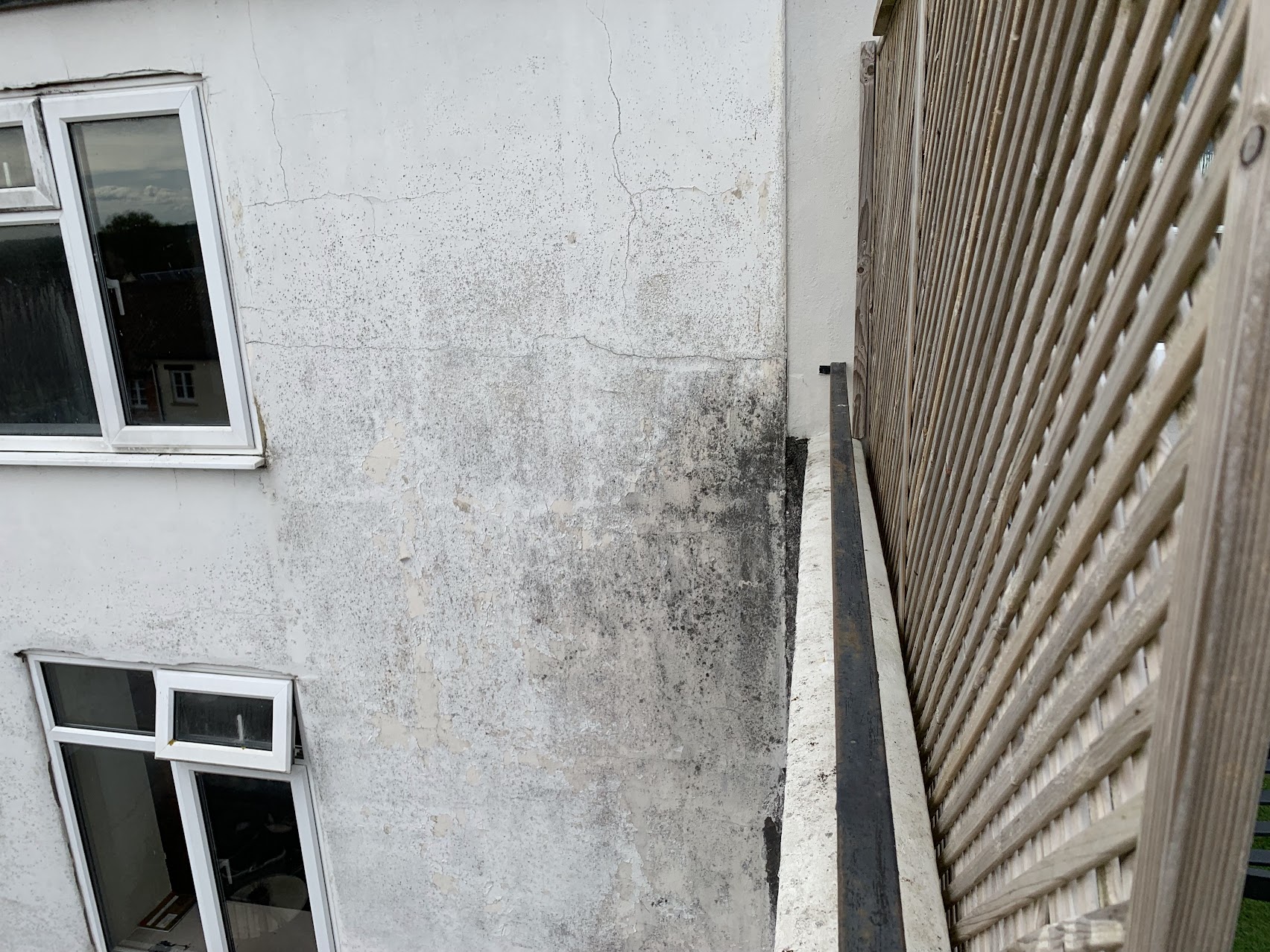
Moisture sources include leaks, rain penetration, bridging, poor ventilation and condensation. Separate cause from symptoms. Record location and extent, moisture readings, ventilation, related external defects and repair history. Don't blame ventilation or occupant behaviour without examining the fabric and services.
Key dates and the energy rules
The energy requirements arrive five years before the rest of the standard, and differ by tenure.
| Date | Social rented | Private rented |
|---|---|---|
| Now | Current DHS applies | MEES minimum is EPC E |
| 1 April 2030 | EPC C (or equivalent) on one metric of the landlord's choice | — |
| 1 October 2030 | — | EPC C (or equivalent) on a dual metric: fabric performance first, then smart readiness or heating |
| 2035 (1 April for social) | New DHS applies in full | New DHS applies in full |
| 1 April 2039 | EPC C on a second metric | — |
Metrics and certificates
The three reformed EPC metrics are fabric performance, smart readiness and heating system. The policy statement describes the figures used so far as proxy metrics that are not yet final; banding is still out to consultation. Don't infer compliance from an old certificate without checking its validity and the transition rules.
- Private rented transition: a valid EPC showing current-method band C or better, issued before 1 October 2029, counts as compliant until it expires. That can stretch to 2039 given 10-year validity.
- Social transition: until 1 April 2030, a valid EPC at current-method band C counts as compliant for its validity period. Social landlords must always hold an in-date EPC showing compliance.
Private rented cost cap and penalties
- Landlords must spend up to £10,000 per property to meet the standard, including third-party funding (except the Boiler Upgrade Scheme). Reasonable EPC assessment costs count.
- For properties worth under £100,000, the cap is 10% of value.
- Qualifying spending from 1 October 2025 counts towards the cap.
- If the property still falls short after reaching the cap, the landlord can register a 10-year exemption. Other exemptions remain where measures cannot be installed.
- The maximum MEES fine per breach rises to £30,000.
Social landlords also have a £10,000 spend exemption; details are in the separate social MEES response.
Wider DHS enforcement (private rented)
Local authorities must act on category 1 hazards and may act on other failures. The maximum fine for breaching enforcement action rises from £30,000 to £40,000. A new civil penalty of up to £7,000 for serious failures is intended to come in before the full standard.
Duties that apply now
The 2035 date does not suspend any current obligation. Report immediate risks separately from longer-term compliance exposure.
- Housing Act 2004, Part 1: private rented homes must already be free of category 1 hazards, enforced by local authorities.
- Homes (Fitness for Human Habitation) Act 2018: homes must be fit for habitation at the start of and throughout a tenancy.
- Current DHS: social landlords must keep meeting it until the new standard applies.
- Awaab's Law (social housing): phase 1 has applied since October 2025, covering damp and mould and emergency hazards. Landlords must investigate and fix these within set timescales. Phases 2 and 3, covering most other hazards, follow over the next two years.
- Awaab's Law (private rented): the Renters' Rights Act 2025 allows it to be extended to the sector; the government will consult on the detail.
- Electrical, gas and fire safety rules continue to apply alongside the DHS.
For damp and mould in social housing, Awaab's Law is the immediate concern: it sets response deadlines now. Criterion E is meant to stop problems reaching that point.
A due diligence workflow
- Establish the property and tenure facts. Confirm location (England or Wales), use, tenure, number of units and occupancy. Check whether units are social or private rented and whether any differ. These decide which regime and energy dates apply.
- Check the current position first. Assess against today's rules: category 1 hazards, fitness for habitation, the current DHS for social stock, Awaab's Law where it applies, and EPC E for private lets.
- Combine records with inspection. Review EPCs (with issue dates and method), repair records, complaints, planned maintenance, previous HHSRS assessments and stock-condition data. Missing records are a finding, not proof of compliance.
- Assess against the five criteria. Use the Annex A component list for criterion B. Score damp and mould against the A–H threshold, not just category 1.
- Separate immediate works from future investment. Use distinct categories: urgent safety or water-ingress issues; current repair liabilities; planned improvements for 2030 and 2035 standards.
- Test costs and assumptions. For each intervention, record evidence, scope, indicative cost, dependencies and uncertainty. Check how energy spend sits against the £10,000 cap (or 10% of value). Flag where fabric, roof, heating or electrical capacity needs specialist assessment.
- Report limitations clearly. State inspection scope, inaccessible areas, documents not supplied and assumptions about EPC validity. Label conclusions that depend on unpublished guidance or unfinalised metrics as provisional, and recommend review once confirmed.
Frequently asked questions
- Does the new standard apply to every home in England?
- No. It covers social and privately rented homes in England, not owner-occupied homes. Leasehold guidance is still to come.
- Does the 2035 date mean landlords can wait to repair defects?
- No. Existing duties continue, Awaab's Law already applies to social housing, and the statement says landlords should not delay all action.
- Is an EPC C rating enough to show compliance?
- Not necessarily. The future test uses reformed metrics that differ by tenure. An existing band C certificate may count under transition rules, but only while valid and if issued in time.
- Is a damp problem that isn't category 1 acceptable?
- Not under the new standard. Criterion E fails at bands A–H, so most category 2 damp and mould hazards also fail.
- Can a desktop review confirm that a property meets the standard?
- No. It can identify risks and information gaps, but not the condition of concealed components. It cannot replace an inspection, HHSRS assessment or energy assessment.
Conclusion
The reformed DHS gives a clearer framework for assessing rented housing, but it does not remove the need for evidence-led assessment. Confirm tenure and location, check today's obligations first, and treat energy rules as date-sensitive. Pay particular attention to damp and mould, where the new threshold is much lower than many will expect. A future deadline does not make today's property risks less important.
Sources
- The New Decent Homes Standard: policy statement — MHCLG, 28 January 2026
- Improving the energy performance of privately rented homes: government response — DESNZ, January 2026
- EPC reforms and MEES for private-rented property confirmed — Pinsent Masons (cost cap, property value adjustment, £30,000 fine)
- The Warm Homes Plan and MEES for privately rented homes — Simmons & Simmons (EPC costs within the cap)
- Damp and mould: understanding and addressing the health risks for rented housing providers — government guidance
This guide is general information, not legal advice. Check final regulations and guidance before relying on it for a specific property.